
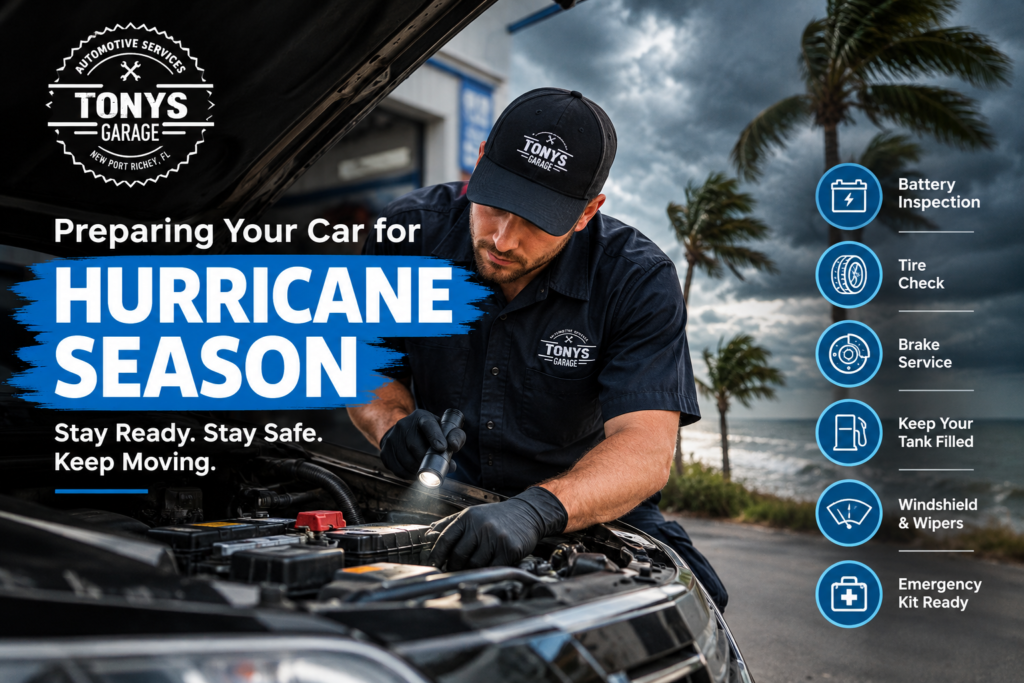
I’ve lived and worked in Florida long enough to know how fast things can turn. A named storm forms in the Gulf; the track shifts overnight, and suddenly people who had three days to prepare are scrambling with twelve hours. And right in the middle of all of it is a car that hasn’t been looked at since last winter.
Hurricane season runs from June through November here. That’s half a year. And yet every single storm season, we see the same thing: people pulling in the day before an evacuation order with a battery that’s been on borrowed time, tires that are half worn down, and brakes that have been making noise since February.
Your car is your exit plan. Treat it like one.
Start With a Battery Inspection Before You Need It
This is where most people get caught. A battery can seem perfectly fine right up until it isn’t. Hot Florida summers are brutal on batteries; the heat accelerates the internal breakdown of battery cells in ways that cold weather never does. By the time hurricane season hits in the fall, a battery that’s been working hard all summer might have very little left in it.
A battery inspection takes about ten minutes. We load-test it, check the terminals for corrosion, and tell you exactly what condition it’s in. If it’s got life left, great. If it’s borderline, the conversation about replacing it is a lot easier to have in June than the night before a storm.
Don’t wait for the car to not start to find out where your battery stands.
Check Your Tires All Four, Not Just a Quick Glance
Evacuation routes during hurricane season don’t look like normal Florida traffic. They look like parking lots that slowly move. You could be sitting on I-75 or US-19 for hours in the heat, fully loaded, inching forward. That’s hard on tires especially tires that are already low on tread or running at the wrong pressure.
Check the tread depth and look at the sidewalls for any cracking or bubbling. Florida’s UV exposure and heat dry out rubber faster than most people realize. A tire that looks okay standing still in the driveway can behave very differently under sustained load and heat on a packed evacuation highway.
And check the spare. Seriously. We’ve had people come in after a storm and realize their spare was flat or bone dry. That’s a bad discovery to make on the side of a highway during an evacuation.
Brakes Are Not Something to Guess About
If your brakes have been making any noise at all squealing when you slow down, a little shudder in the pedal, anything hurricane season is not the time to keep putting it off.
Think about the driving conditions during an evacuation. Stop and go for hours. Sudden braking when traffic bunches up. Potentially wet roads if the outer bands are already moving through. Your brakes need to be in good shape for exactly those conditions.
Getting your brakes checked before the schedule forces you to is one of the smartest things you can do heading into storm season. If they’re fine, you’ll know. If they need attention, you’ve got time to handle it without pressure.
Fuel Up Early Don’t Be the Person in the Gas Line
This one isn’t mechanical advice; it’s practical advice from watching this happen for twenty-plus years. The moment a storm enters the Gulf and starts tracking toward Tampa Bay, gas stations run low fast. Within twelve to twenty-four hours of a serious watch or warning, you’ll find lines stretching out of parking lots and plenty of pumps that are simply empty.
Keep your tank above half during active hurricane season. Not just when a storm is coming as a general habit from June through November. It costs you nothing extra, and it means you can leave immediately if you need to, without stopping anywhere first.
Your Windshield Matters More Than You Think
A cracked or chipped windshield is a real structural vulnerability in severe weather. A chip that’s been sitting there for six months might hold up fine under normal conditions, but high winds, debris, and pressure changes during a storm are different. Most windshield chips are repairable quickly and inexpensively if caught early. A full crack usually means replacement.
If you’ve been ignoring a chip or a small crack, before hurricane season is fully underway is the right time to deal with it. Your windshield is part of your car’s structural integrity it’s not just glass.
Build a Car Emergency Kit and Leave It There
An emergency kit in your car doesn’t need to be complicated. Water at least a gallon per person. A basic first aid kit. Phone charger and portable power bank. Flashlight with fresh batteries. A paper map of Florida and your intended evacuation route. Cash in small bills. Copies of important documents in a waterproof bag.
Put it together once, leave it in the car, and check it at the start of each hurricane season to swap out anything expired or used.
If your evacuation gets complicated traffic jams, detour, breakdown that kit is what keeps the situation manageable instead of miserable.
Come In Before the Season Gets Busy
Here’s the honest version of this. Every year, the week before a major storm, our phones ring off the hook. People want oil changes, battery checks, tire rotations, and everything they’ve been putting off. We do our best, but we can’t always fit everyone in on short notice.
The smarter move is to come in during June or early July, before hurricane season is in full swing, and let us do a full vehicle inspection in Port Richey. We’ll check the battery, tires, brakes, fluids, belts, and hoses everything that matters for a long drive under pressure. We’ll tell you what’s good and what needs attention, and you’ll have plenty of time to take care of it without the clock running.
At Tonys Garage in Port Richey, we’ve been helping Florida drivers stay road-ready through storm seasons for over two decades. All makes and models. Honest assessments. No pressure.
Don’t let your car be the weak link in your hurricane plan.
Frequently Asked Questions
Q: What should I check on my car before hurricane season starts?
A: The essentials are battery, tires, brakes, windshield, fluids, and wipers in roughly that order of urgency. Your battery is the most likely to fail without warning after a hard Florida summer. Tires need a tread depth check and a sidewall inspection for cracking from UV exposure. Brakes should be checked if you’ve heard anything unusual or if it’s been more than a year since your last inspection. Add a full fluid check coolant, oil, brake fluid, power steering and make sure your wiper blades are clearing the windshield rather than just smearing it. Come in for a pre-season inspection, and we’ll go through everything at once.
Q: Should I fill up my gas tank before a hurricane?
A: Yes, and sooner than you think you need to. Don’t wait for a watch or warning to be issued by then; gas stations in most of the Tampa Bay area will already have lines or shortages. The practical habit during hurricane season is keeping your tank above the halfway mark all the time from June through November. It adds almost nothing to your routine and means you can leave immediately if an evacuation order comes down without making any stops first. If you have a second vehicle that sits mostly unused, keep that one full too.
Q: How do I protect my car from flood damage during a storm?
A: The most important thing is parking elevation. If you have the option to move your car to a higher elevation garage or covered structure before a storm, do it. Avoid parking in low-lying areas, near drainage ditches, or anywhere that’s flooded in previous storms. If flood water gets into the engine, transmission, or electrical system, the damage is often severe and expensive. If your car does sustain water damage, don’t try to start it tow it in for an inspection first. Starting a water-damaged engine can cause catastrophic internal damage in seconds.
Q: What’s the most important car maintenance to do before evacuating?
A: Fuel first you need a full tank before you get on the road. After that, a quick check of tire pressure including the spare, and a visual scan for any obvious issues like fluid puddles under the car or warning lights on the dash. If you have time before an evacuation order is issued, get your battery tested if it’s more than three years old. A dead battery in stopped evacuation traffic is one of the worst situations you can be in. The best version of this is handling all of it before a storm is in the forecast not the night before you’re trying to leave.
Q: Can I drive my car through standing water after a hurricane?
A: This is one where I’ll be very direct generally no, and certainly not without knowing how deep it is. Six inches of moving water is enough to affect vehicle control. Just twelve inches can float many smaller cars. Even water that looks shallow can hide road damage, debris, downed power lines, or open drains underneath. If there’s any doubt, don’t drive through it. The repairs from flood damage electrical systems, engine hydro locking, and interior mold are extensive and expensive. If you’ve already driven through standing water, have the car inspected before assuming everything is fine.