
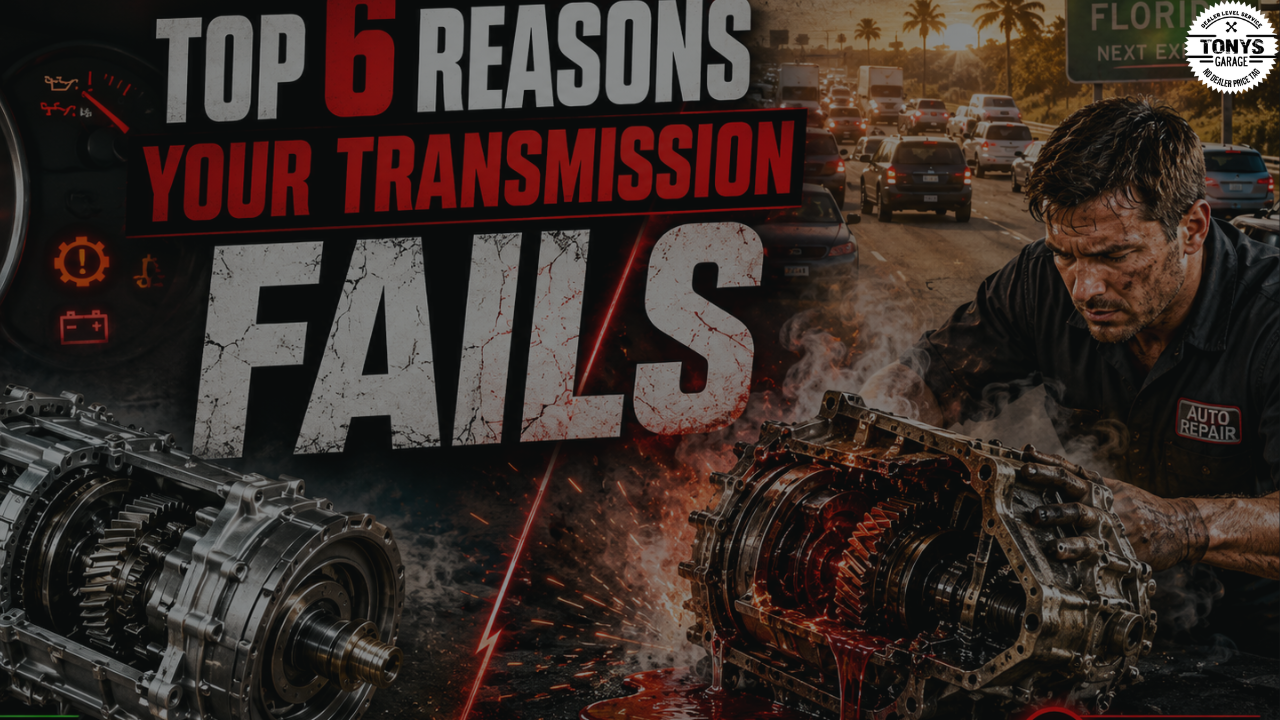
Your car talks to you before it breaks down. Most drivers just miss the signs.
One rough shift. A strange smell. Maybe a delay when you hit the reverse. It starts small, then suddenly your vehicle won’t move the way it should. Here in Florida, heat and stop-and-go traffic can wear transmissions faster than many people expect.
If you’ve been putting off maintenance, now’s the time to pay attention. A damaged transmission can turn a simple drive into a stressful situation fast.
1. Low or Dirty Transmission Fluid
This is probably the biggest reason drivers end up needing major repairs. Transmission fluid keeps everything cool and lubricated. Without it, parts grind together and heat builds up quickly.
Florida heat doesn’t help either. Long drives, heavy traffic, and hot pavement push your system harder every day. Over time, the fluid breaks down and loses its ability to protect the moving parts.
You might notice slipping gears, delayed shifting, or even shaking while driving. Those warning signs matter. Ignoring them usually leads to bigger problems later.
Regular transmission services can catch fluid issues before real damage happens. Trust me, a simple fluid check costs far less than replacing the whole system.
2. Overheating During Daily Driving
Heat is brutal on vehicles. And honestly, Florida drivers deal with plenty of it year-round.
When temperatures rise, your transmission works overtime to stay cool. Towing heavy loads, sitting in traffic, or driving long highway stretches can push temperatures beyond safe limits. Once overheating starts, seals crack and internal components wear out much faster.
A lot of drivers don’t realize the damage until the vehicle begins jerking or refusing to shift smoothly. By then, the repair bill may already be climbing.
Good maintenance matters here. Professional transmission services help keep cooling systems working properly and reduce unnecessary stress on your vehicle.
3. Skipping Routine Maintenance
We get it. Life gets busy. Oil changes are easy to remember, but many drivers forget about their transmission completely.
That’s risky.
Your vehicle needs regular inspections to catch worn seals, fluid leaks, and early wear. Small issues grow fast when they stay hidden. A neglected system can fail without much warning at all.
This is where smart drivers save money. Routine inspections help extend the life of transmissions and reduce the chances of sudden breakdowns on Florida roads.
And honestly, nobody wants to get stranded during a summer storm or weekend trip
4. Driving Habits That Cause Damage
Some transmission problems come directly from the way people drive every day.
Fast acceleration, hard braking, and shifting gears before stopping fully can wear parts down over time. It may not seem serious in the moment, but those habits slowly create stress inside the system.
Heavy towing without the right setup is another common issue. Your vehicle might handle it for a while, but constant strain eventually catches up.
Drivers often don’t connect rough driving with future repair costs. Then one day the vehicle hesitates, slips, or refuses to move correctly.
That’s when transmissions repair becomes necessary. And depending on the damage, repairs can get expensive fast.
Smooth driving really does make a difference. Your car feels like it every mile.
5. Ignoring Warning Signs
Cars rarely fail without giving clues first.
Maybe you hear grinding noises. Maybe the check engine light comes on for no obvious reason. Some drivers notice burning smells or leaking red fluid under the vehicle. Others feel hard shifting while driving through traffic.
Those signs shouldn’t be ignored.
A small repair today could prevent complete failure tomorrow. Waiting too long usually means more damaged parts and longer repairs times.
This happens all the time with transmissions because people hope the issue will “go away on its own.” Unfortunately, it almost never does.
Experienced technicians can diagnose problems early and recommend the right fix before things become severe. Quick action matters more than most drivers realize.
6. Poor Quality Repairs or Wrong Parts
Not every repair shop provides the same level of care. And sadly, low-quality work can create even bigger transmission problems later.
Using incorrect fluid types, cheap replacement parts, or rushed installation methods can shorten the lifespan of your vehicle fast. Some issues don’t appear immediately either. A transmission may seem fine for weeks before symptoms return.
That’s why choosing trusted professionals matters so much. Skilled technicians understand how transmissions respond under Florida driving conditions. They know what works and what causes future headaches.
Reliable transmissions repair should focus on long-term performance, not temporary fixes. You deserve repairs that actually last.
Florida Drivers Shouldn’t Wait Until It’s Too Late
Transmission damage usually starts quietly. A tiny leak. A rough shift. A strange vibration during your morning commute. Those little issues grow quickly when ignored.
The good news? Most major failures are preventable.
Regular inspections, better driving habits, and fast attention to warning signs can help keep your vehicle running smoothly longer. Whether you drive daily through city traffic or take long highway trips across Florida, protecting your transmission is worth it.
And right now, is honestly the best time to act before repairs become overwhelming.
Frequently Asked Questions
- How do I know if my transmission is failing?
Common signs include delayed shifting, slipping gears, grinding noises, fluid leaks, or burning smells. If your vehicle feels different while driving, it’s smart to get it inspected quickly. - How often should transmission fluids be changed?
It depends on your vehicle and driving habits. Many Florida drivers benefit from fluid checks every 30,000 to 60,000 miles because heat can wear fluid down faster. - Can overheat ruin a transmission?
Yes, Excess heat damages seals, fluid quality, and internal components. Overheating is one of the leading causes of transmission failure in warmer states like Florida. - Are transmission problems expensive to fix?
Costs vary depending on the issue. Small repairs are usually affordable when caught early. Waiting too long can lead to full replacement costs instead. - Why are regular transmission services important?
Routine maintenance helps spot leaks, worn parts, and fluid issues before they become serious. Preventive care extends the lifespan of your vehicle and reduces breakdown risks.