
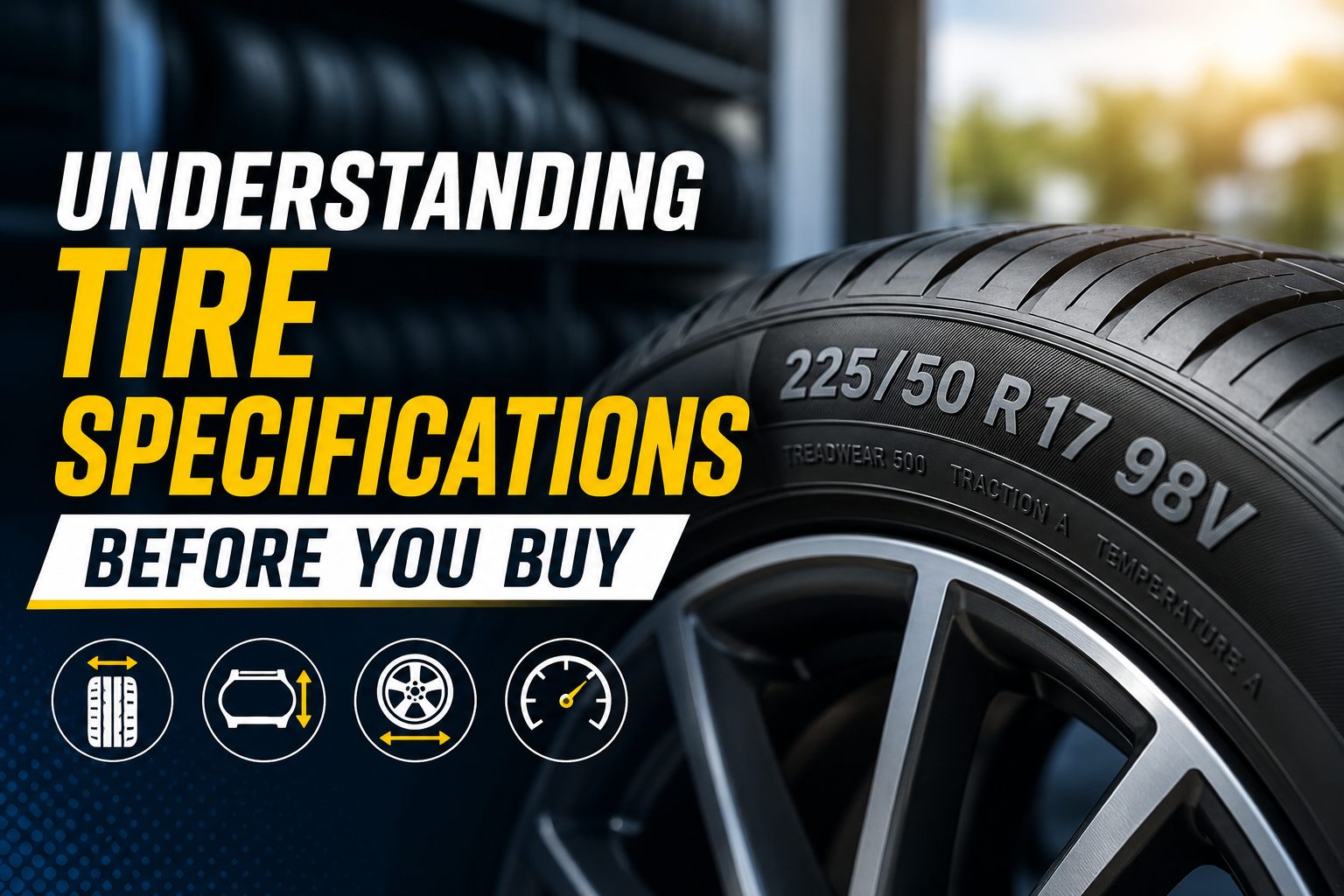
That sidewall code is telling you something you just have to know how to read it.
I’ll be honest. Most people come in, point at a tire, and say they need the same one. Which is fine that works. But every now and then someone buys tires online or at a big box store, and the numbers are just slightly off. And then we have a problem.
Those numbers on the sidewall aren’t decoration. Every single one means something. And if you get the wrong combination, you could be putting something on your car that doesn’t fit right, doesn’t handle right, or wears out too fast for your driving conditions.
Let me explain the way I’d explain it standing right here in the shop.
Tire Type: That first letter is more important than people think
The code usually starts with a letter. P means it’s a passenger tire. LT means a light truck. No letter at all usually means it’s a metric tire common on European vehicles.
That designation tells you what the tire was built to handle. Load capacity, construction, and rated. Running the wrong tire type for your vehicle doesn’t always cause an immediate problem. But over time, or in a demanding situation, it can bite you.
We always check this first. It’s the foundation everything else sits on.
Tire Width: The First Big Number
Right after that letter, you’ll see three digits. That’s the tire width in millimeters measured straight across from one sidewall to the other.
Wider tires give you more contact with the road. That can help with grips, especially in the rain. But too wide and you start having clearance problems, heavier steering, and worse gas mileage. Florida roads see a lot of rain, so this number matters more here than people realize.
Stick to what your vehicle was designed for unless you’ve got a real reason to change it and someone knowledgeable signs off on it.
Tire Aspect Ratio: The number after the slash
After the width, there’s a slash and then a two-digit number. That’s the aspect ratio: the height of the sidewall expressed as a percentage of the width.
Lower numbers mean a shorter sidewall. You’ll see that in sports cars. Higher number means more sidewall height and a cushier ride. Neither is wrong. It depends on what you’re driving and what you want the car to feel like.
I always tell people not to just chase a look. Low-profile tires look sharp, but they ride harder, and they’re more vulnerable to pothole damage. Here in Florida, with some of the roads we’ve got, that’s worth thinking about.
Tire Construction: That letter in the middle nobody asks about
After the aspect ratio, there’s usually an R. Radial construction. That’s what almost every tire on the road today is, and for good reason. Radial tires run cooler, last longer, and handle highway driving better than the old bias-ply design.
You might occasionally see a D instead of diagonal construction, but that’s mostly on trailers and specialty equipment. For your car or truck, you want to see R. If you’re ever looking at a tire and it doesn’t have that letter, ask questions before you buy.
Wheel Diameter: Has to match, no exceptions
The last number in that main sequence is the rim diameter inches. A 17 fits a 17-inch wheel. An 18 fits an 18-inch wheel. There’s no wiggle room here.
I’ve seen people buy tires online, get everything else right, and mix up this one number. The tires show up and they don’t mount. Then they’re stuck. Double-check this every single time before you order anything.
Just Come Ask: We’ll wort it out in five minutes
Looking at tire specs isn’t something most people should have to memorize. That’s what we’re here for. If you’re not sure what your car needs, swing by or give us a call. We’ll look it up, make sure we’ve got the right spec, and get you sorted without all the guesswork.
Been doing this for over twenty years here in New Port Richey. Tires are something we deal with every single week across all kinds of vehicles. We’re not going to talk you into something you don’t need or put the wrong thing on your car just to make a sale.
Right tires matter. Handling, safety, how long they last all of it starts with getting the spec right from the beginning.
Frequently Asked Questions
- Can I put a different size tire on my car than what’s recommended?
Sometimes, yes, but not by much and not without checking first. A small change in width can be okay depending on your specific vehicle. But wheel diameter has to be exact, no exception. And if you go too far off spec on anything, you start running into clearance issues, handling changes, and your speedometer reading wrong. If you’re thinking about sizing up or down for any reason, come talk to us first. We’ll tell you what’s safe and what isn’t for your car, specifically not just a general answer. - What does the speed rating on a tire mean, and does it matter?
It matters more than most people give it credit for. Speed rating is a letter of code that tells you the maximum sustained speed the tire is engineered to handle. But the bigger issue isn’t top speed, it’s heat. A tire rated below your vehicle’s requirements will build heat faster at highway speeds and wear out quicker or fail earlier. Always match or exceed the speed rating your vehicle calls for. It’s one of those things that doesn’t seem important until it is. - How do I find the right tire spec for my vehicle?
Look at the sticker inside your driver’s door jamb. It’s usually right there for the factory recommended tire size printed in plain text. If that sticker is gone, the owner’s manual has it. And if neither of those is available, we can look it up in about thirty seconds. One thing I’d caution against is that I don’t just assume whatever is on the car right now is correct. Previous owners sometimes put the wrong size, and it just gets carried forward from there. - Does tire brands actually make a difference?
Yes, but maybe not in the way you’d expect. Brand reputation matters somewhat, but what really matters is whether the tire specs and compound are right for your driving conditions. A solid mid-range tire with good wet weather ratings is going to serve you better in Florida than a premium brand in the wrong application. That said, there are real differences in quality between budget tires and better one’s tread life, wet grip, road noise. We’ll always recommend something that fits your budget and actually makes sense for your vehicle. Not just whatever has the best margin for us. - How do I know when my tires actually need to be replaced?
The tread depth test is the quick one penny in the groove, Lincoln’s head down, if you can see the top of his head the tread is worn out. But here in Florida, age matters just as much. The UV and heat here dry out rubber faster than in most parts of the country. A tire that’s six or seven years old might look fine on the surface and still have sidewall cracking or internal degradation that you can’t see. If your tires are getting up there in age, let us take a look. We’ll give you an honest answer on whether they’ve got life left or whether it’s time.