
Your Brakes Are Talking to You: Are You Listening?
That squeals when you slow down at a red light. The slight shudder in the pedal when you brake on the highway. Most people ignore those things for weeks, sometimes months. And in Florida, where you’re braking hard in stop-and-go traffic on US-19 or making sudden stops to avoid unexpected traffic, ignoring those signs is a real gamble.
Brake repair is one of those things that seems optional until it absolutely isn’t. And the number one question we get is: do I need new pads, new rotors, or both? The answer isn’t always what people expect. Let’s break it down.
Brake Pads: The Part That Wears Out First
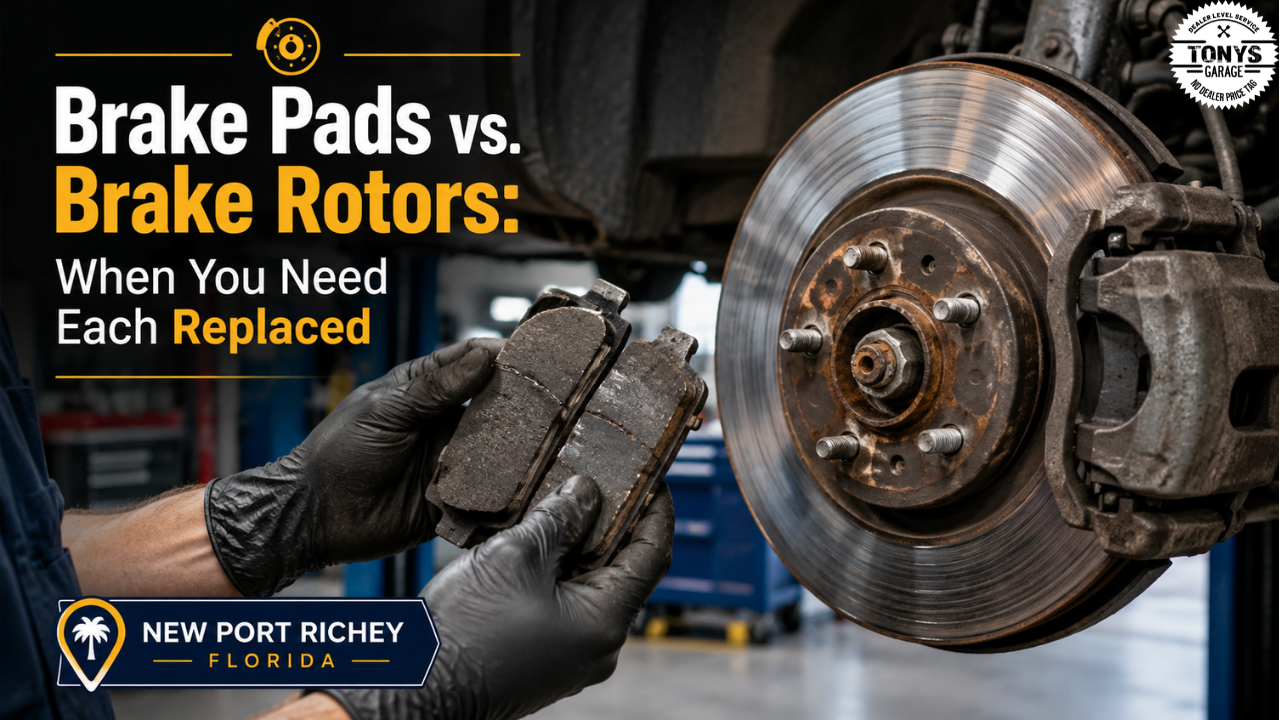
Brake pads are the friction material that clamps against your rotor to slow the car down. They’re designed to wear out; that’s their job. Every time you press the brake pedal, a little more of that material gets used up. Over time, the pad gets thinner. When it gets too thin, that’s when the trouble starts.
Squeaking brakes is usually your first warning. Most brake pads have a small metal wear indicator built specifically to make that noise when the pad gets low. It’s annoying on purpose. The sound is meant to get your attention before the situation gets worse.
Trust me, you don’t want to wait until the squeak turns into something more serious.
How long do brake pads last? It depends a lot on how and where you drive. City driving with lots of stopping wears them faster than highway miles. In Florida’s heat, brake components can degrade faster too. Generally, somewhere between 30,000 and 70,000 miles but get them checked regularly rather than waiting for a mileage number to tell you it’s time.
Brake Rotors: A Completely Different Story
Rotors are the large metal discs that the brake pads press against. They’re built tougher than pads, and they last longer, but they absolutely wear out too, and they can get damaged faster than people realize.
Here’s what most people don’t know. Rotors can fail in two different ways. They can wear thin over thousands of stops, which is normal and expected. Or they can warp meaning they develop an uneven surface from heat cycling, hard braking, or just sitting wet in Florida for humidity for too long.
Warped rotors feel different from worn pads. Instead of squeaking, you’ll usually feel a pulsing or vibration through the brake pedal when you stop. Sometimes the steering wheel shakes while braking. That’s not a pad issue; that’s the rotor.
Grinding noise when braking is a different signal entirely, and it’s a more urgent one. When you hear metal grinding, it usually means the pads have worn completely through, and metal is now contacting metal. At that point, the rotors are almost certainly getting scored and damaged with every stop. What could have been a pad replacement is now turning into a full brake repair pad and rotors both.
Do You Always Replace Both at the Same Time?
Not necessarily, but often yes. Here’s the honest answer.
When rotors still have enough thickness and the surface is smooth and even, you can replace just the pads and resurface or keep the rotors. When rotors are warped, worn below the minimum thickness, or have deep grooves from metal-on-metal contact, they need to go.
The reason a lot of shops replace both together is practicality. You’re already there doing the work. New pads bedding on an uneven or worn rotor surface don’t perform as well and wear faster. For most people, it makes sense to replace them together and not have to come back in six months.
We always measure the rotor thickness and inspect the surface before we make a recommendation. We’re not going to tell you to replace rotors that have life left in them. But we’re also not going to put new pads on surfaces that are going to compromise how they perform.
What Does Brake Replacement Cost Actually Look Like?
Brake replacement cost varies depending on what needs to be done, the make and model of your vehicle, and what parts you use. Pads alone are the least expensive. Pads plus rotors on all four corners obviously cost more. European vehicles with larger, more complex brake systems typically run higher than domestic or Japanese models.
What we won’t do is give you a vague answer on the phone and then change the number when you get here. You’ll know the full cost before we touch anything. That’s just how we operate.
The cheapest brake repair is always the one you catch early before the pads wear through and take the rotors with them. Waiting costs more. Every time.
Don’t Sit on This One
Brakes aren’t a “wait and see” system. They’re the single most important safety component in your car. If you’re hearing squeaking brakes, feeling that pedal pulse, or noticing any grinding when you stop coming in and let us take a look.
At Tonys Garage in New Port Richey, we inspect brakes, give you a straight answer on what’s worn and what isn’t, and get the work done right. All makes and models. Backed by our 24-month warranty.
If something feels off when you’re stopping, don’t wait for it to get louder. That sound is costing you money and more importantly, it’s a safety issue for you, your family, and everyone else on the road.
Come see us. Let’s get it sorted out.
Frequently Asked Questions
- How do I know if it’s my brake pads or rotors making that noise?
Squeaking brakes especially when you first apply the pedal almost always point to worn pads. That high-pitched squeal is usually the wear indicator doing exactly what it’s designed to do. Grinding is different. Grinding means the pad material is gone, and metal is hitting metal, which damages the rotor’s surface too. Pulsing or vibrating through the pedal while braking usually points to warped rotors rather than pad wear. That said, symptoms can overlap, and the only real way to know is to have someone pull the wheels and look at what’s there. - Can I replace just the front brakes and leave the rear ones?
Yes, if the rear brakes still have life in them. Brake wear isn’t always even when front brakes typically wear faster because they handle more of the stopping force. We inspect all four corners and report what we find on each other. If the rear brakes are fine, we’ll tell you that. We’re not going to replace parts that don’t need replacing. But if the rear is close to the limit, we’ll have that conversation with you too, so you’re not coming back in a few months. - Is it safe to drive with squeaking brakes for a while?
For a short time, maybe if it’s just the wear indicator starting to make noise, and the pads haven’t worn through yet. But I wouldn’t push it. That squeal is a warning, not a countdown timer you can set and ignore. Driving too long on worn pads risks metal-on-metal contact, which damages the rotors. What starts as a couple hundred dollars in pads can turn into a much bigger brake repair bill. Come in sooner rather than later. - How long does a brake repair typically take?
A standard brake job pads and rotors on one axle usually takes somewhere between one and two hours depending on the vehicle. If we’re doing all four corners or dealing with a seized caliper or other complication, it takes a bit longer. Most customers are in and out the same day. We’ll give you a realistic time estimate when you drop off and keep you updated if anything changes. - Do European cars cost more to have brakes done?
Typically, yes. European vehicles like BMW, Mercedes, Audi, Porsche, and similar often use larger brake systems with higher-spec parts, and some require specific tools or electronic brake system reset procedures after the job. The parts themselves cost more, and the labor can take longer. That said, the quality of the repair matters more than finding the cheapest option. A proper brake repair done right on a European vehicle is worth doing correctly the first time.