
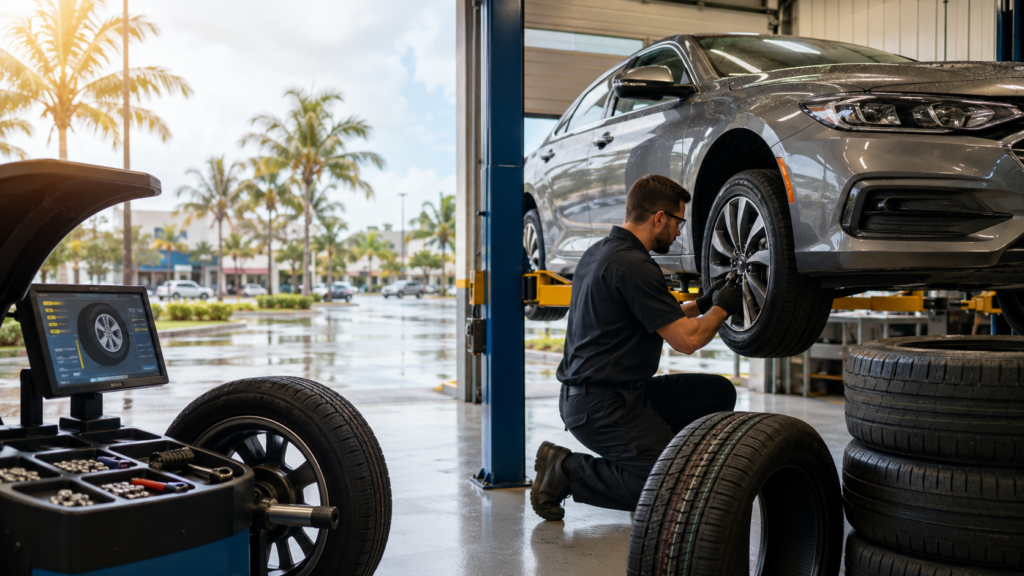
Florida Roads Can Be Tough on Tires
Florida driving seems simple, but your tires handle plenty of stress. Hot pavement, heavy rain, long commutes, construction zones, and sudden potholes can all contribute to uneven tire wear.
A dependable tire rotation schedule helps each tire share the workload more evenly. Most Florida drivers should rotate their tires every 5,000 to 7,500 miles, unless the vehicle manufacturer recommends another interval.
That range works for many cars, SUVs, and light trucks. Your driving habits still matter. Highway travel, stop-and-go traffic, towing, and daily driving on hot roads may call for earlier service.
One of the easiest tire maintenance tips is to pair this visit with your oil change. It saves time and makes the mileage easier to remember.
Regular rotation also gives a technician a chance to inspect the tread. Small issues can be caught before they become noisy, uncomfortable, or expensive.
Rotation and Balancing Are Not the Same
These services are often mentioned together, but they solve different problems. A rotation moves the tires to different positions on the vehicle.
Front tires usually handle more steering and braking work. That extra effort can make them wear faster than the rear tires.
Balancing focuses on how the wheel and tire spin. Small weights are added to help the assembly turn smoothly at higher speeds.
Your tire rotation schedule may stay consistent, while balancing is often based on symptoms. You may need balancing after installing new tires, repairing a tire, hitting a deep pothole, or feeling the steering wheel vibrate.
A shaking steering wheel at highway speed is a common warning sign. You might also feel a light vibration through the seat or floor.
Correct tire pressure matters too. An underinflated tire can flex and build heat, while an overinflated tire may wear faster in the center.
Check it at least once a month and before a long trip. Use the number on the driver-side door label, not the maximum number printed on the tire.
Pay Attention to Early Warning Signs
Mileage helps, but your vehicle may give you clues before the next service. Watch for changes in steering, road noise, grip, and ride quality.
Uneven tire wear is one of the clearest signs that something needs attention. You may notice one edge wearing faster or patches appearing across the tread.
A missed rotation can contribute to this problem. Alignment trouble, worn suspension parts, or incorrect inflation may also be responsible.
Run your hand lightly across the tread while the vehicle is safely parked. If the surface feels choppy or noticeably different from one area to another, arrange an inspection.
Check tire pressure when the tires are cold. Florida heat can change the reading, especially after the car has been sitting in direct sunlight.
Your tire rotation schedule should also reflect how you use the vehicle. Rideshare work, towing, delivery driving, and frequent trips across the state can add miles quickly.
Trust me, waiting until the car feels wrong usually costs more. Early service is simpler and better for the life of the tires.
These tire maintenance tips can help you find a nail, sidewall damage, or low tread before a rainy drive. Florida downpours can turn a familiar road slippery within minutes.
Build a Simple Florida Tire Routine
A good routine doesn’t need to be complicated. Start by checking your owner’s manual for the correct interval and movement pattern.
For many drivers, every 5,000 to 7,500 miles is a practical target. Building the service into your normal maintenance visits makes it harder to forget.
Keep following your tire rotation schedule even when the tread looks fine. Gradual changes are easy to miss when you see the vehicle every day.
Ask the shop to check for uneven tire wear during every visit. A quick tread-depth measurement can show whether the tires are wearing consistently.
Balancing may be needed when you feel vibration or after a hard pothole impact. It is also commonly checked when tires are installed, removed, or repaired.
Keep watching tire pressure between appointments. A slow leak can come from a small puncture, damaged valve, or wheel problem.
Other tire maintenance tips include avoiding hard curb impacts and inspecting the tread before long summer trips. Check again after driving through road debris or rough construction areas.
Consistent rotation can improve how your vehicle feels. Steering may stay steadier, road noise may remain lower, and the tires have a better chance of lasting as a complete set.
Frequently Asked Questions
- How often should I rotate my tires in Florida?
Most drivers should rotate them every 5,000 to 7,500 miles. Always check the owner’s manual because some vehicles and tire types require a different interval.
- Do I need balancing every time my tires are rotated?
Not always. Balancing is usually recommended when you feel vibration, install new tires, complete a tire repair, or notice a change in ride quality.
- What causes uneven tire wear?
Common causes include missed service, alignment problems, worn suspension parts, and incorrect inflation. A professional inspection can identify the cause before more tread is lost.
- How often should I check tire pressure?
Check it at least once a month and before long drives. Measure it when the tires are cold for a more accurate result.
- Can regular rotation help tires last longer?
Yes. Moving the tires between positions helps distribute wear and gives the full set a better chance of reaching its expected service life.
- What are the best tire maintenance tips for Florida drivers?
Inspect the tread monthly, avoid potholes, when possible, watch for vibration, and schedule service before long trips. Stay especially alert during hot and rainy months.