
Your car feels different when the wheels aren’t working properly.
Maybe the steering wheel shakes during highway driving. Maybe the car pulls slightly to one side on Florida roads. Small changes like that usually point toward wheel issues drivers shouldn’t ignore.
A lot of people confuse balancing and alignment because the symptoms can feel similar at first. But trust me, they solve two very different problems.
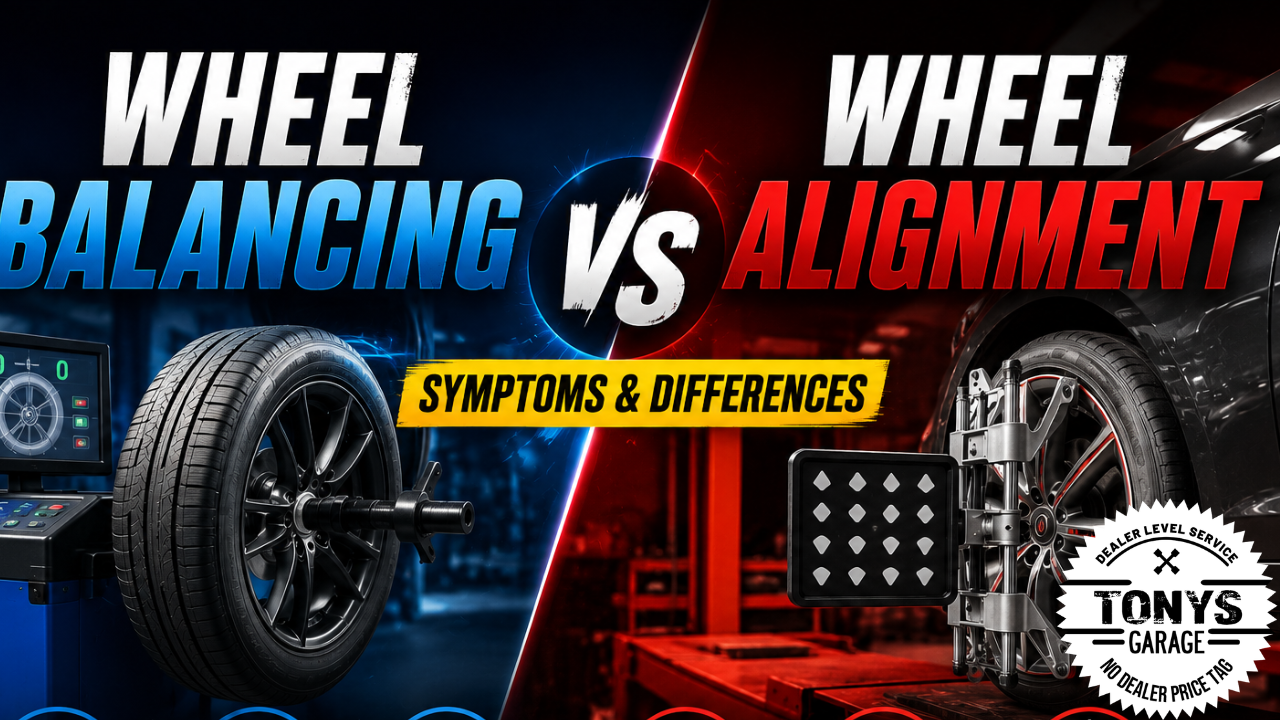
Wheel balancing focuses on weight distribution in the tires.
Every tire and wheel assembly has slightly weight differences. Wheel balancing corrects those uneven spots, so the tires spin smoothly at higher speeds.
When balancing is off, vibrations usually appear while driving. You may feel shaking in the steering wheel, seats, or even the floorboard once speeds increase. Sometimes it starts around 55 miles per hour and gets worse from there.
This is where the topic of Wheel Balancing vs Alignment becomes important for Florida drivers. The symptoms overlap occasionally, but the actual repair process is completely different.
Balancing mainly protects the car’s wheels from uneven tire wear and unnecessary stress during daily driving.
And honestly, nobody enjoys shaky steering wheels during a long highway trip.
Wheel alignment adjusts the angles of your wheels.
Alignment deals with direction and positioning rather than weight.
Technicians adjust the angles of the tires, so they meet the road correctly. When alignment is off, the vehicle may drift left or right even while driving straight. Uneven tire wear also becomes common over time.
Poor alignment can happen after hitting potholes, curbs, or rough roads. Florida storms and damaged pavement don’t help much either.
One major reason drivers search for Wheel Balancing vs Alignment information is because alignment issues often feel subtle in the beginning. A slight pull may not seem serious until tire wear becomes obvious later.
That’s where fuel efficiency can suffer, too. Misaligned tires create extra rolling resistance, forcing the engine to work harder during everyday driving.
Small adjustments make a bigger difference than many people expect.
Vibrations usually point toward balancing problems.
This is one of the easiest ways to tell the difference.
If your steering wheel vibrates consistently at certain speeds, balancing is often the issue. Uneven tire weight creates instability while the wheels rotate, especially during highway driving.
You may notice the vibration comes and goes depending on speed. That pattern is common with balancing problems.
Meanwhile, alignment issues typically affect steering direction more than vibration. The car may drift sideways or require constant correction to stay straight.
Understanding Wheel Balancing vs Alignment helps drivers explain symptoms more clearly when visiting a repair shop. That speeds up diagnosis and prevents unnecessary repairs.
And honestly, smoother driving just feels better overall.
Uneven tire wear tells a bigger story.
Tires wear naturally over time, but uneven wear patterns usually mean something is wrong underneath.
If one side of the tire wears faster than the other, alignment may be the problem. Incorrect wheel angles place uneven pressure across the tire surface during driving.
Balancing issues can also create unusual wear, though it often appears as patchy or cupped areas instead.
Technicians inspect the car’s wheels carefully because tire damage affects handling, ride comfort, and long-term safety. Worn tires also increase stopping distance during heavy Florida rainstorms.
That’s not something drivers should ignore.
Routine inspections help catch these issues before replacing tires becomes necessary too early.
Balancing and alignment both support better vehicle performance.
A properly maintained vehicle feels smoother, safer, and easier to control. That’s one reason regular wheel service matters so much.
Good alignment improves steering precision and helps protect fuel efficiency over time. Balanced tires reduce vibrations and create a more comfortable driving experience during long trips.
Even routine maintenance items like engine oil changes work better when the vehicle operates smoothly overall. Everything inside the car works together, especially during daily commute and highway driving.
That’s why Wheel Balancing vs Alignment discussions matter beyond just tire wear. Both services directly affect comfort, handling, and long-term vehicle reliability.
Florida drivers spend plenty of time on the road. Smooth handling makes every trip feel easier.
Some symptoms may require both services together.
Here’s the part many people don’t realize.
A vehicle can need balancing and alignment at the same time.
For example, hitting a pothole may throw off wheel alignment while also damaging tire balance slightly. Drivers sometimes notice vibrations along with steering pull afterward.
In those cases, technicians usually inspect the entire wheel setup carefully before recommending repairs.
The goal is simple. Restore proper handling, reduce tire wear, and improve overall driving stability.
And honestly, modern vehicles respond noticeably when everything is adjusted correctly. The steering feels lighter. Highway driving feels smoother. Even tire noise often decreases.
Small corrections create surprisingly big improvements.
Florida roads can wear down wheel systems faster.
Heat, heavy rain, potholes, and long highways commute all place stress on tires and suspension systems here in Florida.
Over time, rough road conditions affect the car’s wheels more than many drivers realize. Small impacts gradually knock alignment out of position or create uneven tire wear patterns.
That’s why routine inspections matter, especially before long trips or hurricane season travel.
Ignoring symptoms too long usually creates larger repair costs later. Tire replacements, suspension of wear, and poor handling all become more likely when wheel problems remain untreated.
Quick inspections save money and improve safety at the same time.
Knowing the difference helps you protect your vehicle.
Balancing and alignment may sound similar, but they solve different driving problems.
Balancing corrects uneven tire weight and reduces vibration. Alignment adjusts wheel angles to improve steering and tire wear. Together, they help your vehicle drive smoothly, safely, and efficiently across Florida roads.
The good news is that most wheel issues are easy to fix when caught early.
And once your vehicle feels stable and comfortable again, you’ll notice the difference between every single drive.
Frequently Asked Questions
- What is the main difference between wheel balancing and alignment?
Wheel balancing fixes uneven tire weight, while alignment adjusts the wheel angles to improve steering and tire wear. - What causes steering wheel vibration?
Steering wheel vibration often points to tire balancing problems, especially when shaking increases at higher speeds. - Can poor alignment affect fuel efficiency?
Yes, Misaligned wheels create extra rolling resistance, which forces the vehicle to use more fuel while driving. - How often should wheel alignment be checked?
Many drivers check alignment yearly or after hitting potholes, curbs, or rough road conditions. - Does balancing help extend tire life?
Yes, Proper balancing reduces uneven wear and helps tires last longer while improving ride comfort.